Rising abruptly from the central plains of Sri Lanka, the Sigiriya Rock Fortress is perhaps the island's most iconic sight. Often referred to as the 'Eighth Wonder of the World,' this ancient palace complex and fortress is a masterpiece of 5th-century urban planning, architecture, and hydraulic engineering.
Sigiriya, or Lion Rock, stands at a staggering 200 meters high, crowned by a majestic palace built by King Kashyapa. Its historical significance, combined with its breathtaking natural beauty, makes it a must-visit for every traveler who ventures to the Pearl of the Indian Ocean.
The Legend of King Kashyapa
The story of Sigiriya is one of ambition, power, and tragedy. In the late 5th century, Prince Kashyapa, the son of King Dhatusena by a non-royal consort, seized the throne from the rightful heir, his brother Moggallana. Fearing his brother's eventual return from exile in India, Kashyapa moved the capital from Anuradhapura to the secure and imposing granite peak of Sigiriya.

There, he transformed the rock into a celestial city, complete with lush gardens, symmetric ponds, and a palace that floated among the clouds. He reigned for 18 years, surrounded by opulence and art, until Mogallana returned with an army. Kashyapa, abandoned by his own troops during a strategic mishap, took his own life on the battlefield, leaving Sigiriya to return to its original state as a Buddhist monastery.
Architectural Marvels
Sigiriya is a stunning example of harmony between nature and human ingenuity. The site is divided into three distinct areas: the upper palace on the rock summit, the mid-level terraces, and the lower gardens.
The Water Gardens
At the base of the rock lie the water gardens, some of the oldest landscaped gardens in the world. They feature a sophisticated system of underground clay pipes and gravity-fed fountains that still function today during the rainy season—a remarkable feat of ancient engineering.
The Lion's Staircase
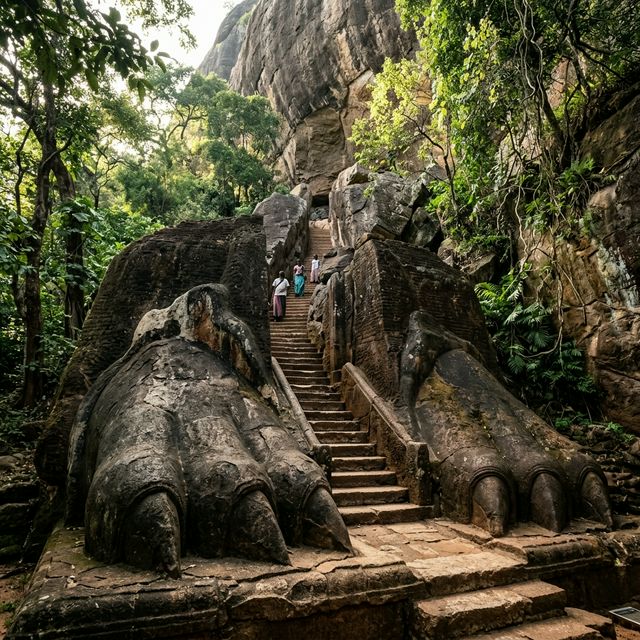
Halfway up the rock, a massive plateau serves as the entrance to the final ascent. Here, King Kashyapa constructed a colossal gateway in the shape of a crouching lion. Today, only the giant paws remain, but they provide a haunting scale of the original structure that gave the rock its name—Sinha-giri (Lion Rock).
The Sigiriya Frescoes and Mirror Wall
On a sheltered ledge high above the ground, the 'Sigiriya Damsels' come to life. These 1,500-year-old frescoes depict ethereal women carrying flowers and offerings. They are among the few surviving examples of secular ancient art in Sri Lanka, painted with vibrant natural pigments that have defied time.
Adjacent to the frescoes is the Mirror Wall. Originally polished so highly that the King could see his reflection while walking by, it is now covered in 'Sigiriya Graffiti'—poems and messages left by visitors dating back to the 7th century, expressing their awe at the rock's beauty.
Visiting Sigiriya Today
To experience Sigiriya is to walk through history. The climb to the top involves over 1,200 steps, but the reward is unparalleled—a 360-degree panorama of the surrounding emerald jungles and distant hills. It is best visited in the early morning or late afternoon to avoid the heat and to witness the rock bathed in the golden light of the tropical sun.